We’d love to know where your work has taken you.
Please EMAIL us with your latest news!
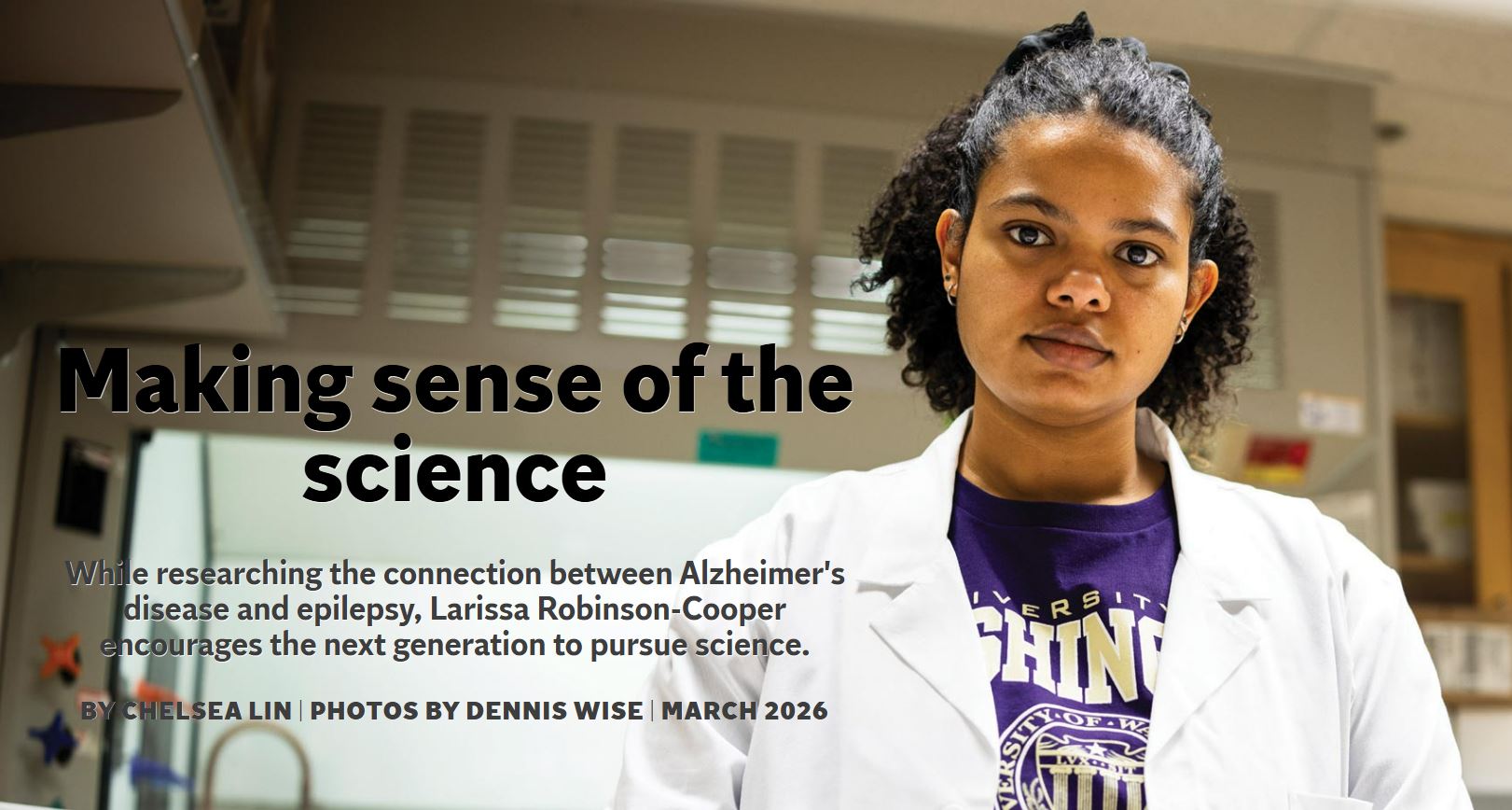
Her passion for science wasn’t exactly love at first lab. The only science career Larissa Robinson-Cooper knew of was being a doctor, and that wasn’t her dream. Still, she enjoyed Mrs. Smith’s anatomy and chemistry classes in her rural Michigan high school enough to stick with science as a college undergraduate. And lucky she did, because she discovered a world of science—and scientific careers—beyond anything she’d dreamed...

Genetic Engineering & Biotechnology News
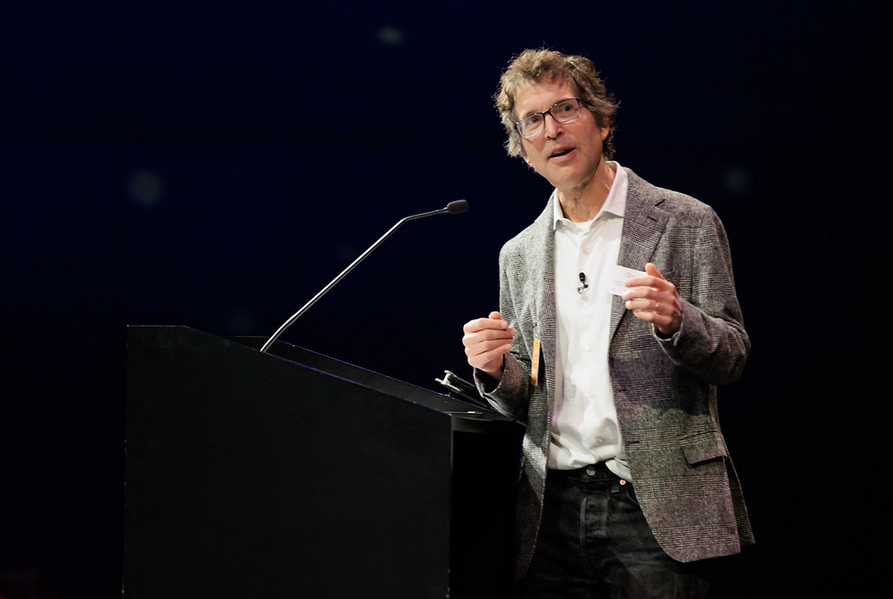
Genetic Engineering & Biotechnology News published an article on Dr. David Baker's Nobel Prize one-year anniversary, which fell on the night of his keynote address to our 2025 Fundraising Event.
SEATTLE—“Proteins are these beautiful and strange mysteries of nature,” described Nobel Laureate, David Baker, PhD, to an audience of fundraiser donors at the Amazon Meeting Center in downtown Seattle. “For many years, the only proteins we knew were the proteins that were found in nature. In the last 10 years, we’ve figured out how to design new proteins to solve the problems that are facing humanity today.”
April 2025
ARCS Scholar named to UW Husky 100
Congratulations to Ryan Carlson MD/PhD, Genome Sciences, 2018-2021 Althea Stroum ARCS Endowment Fellow (28th) announced as one of this year’s University of Washington Husky 100. For the past 10 years, this program has recognized the outstanding work and achievements of students on all three University of Washington campuses who are making the most of their Husky Experience.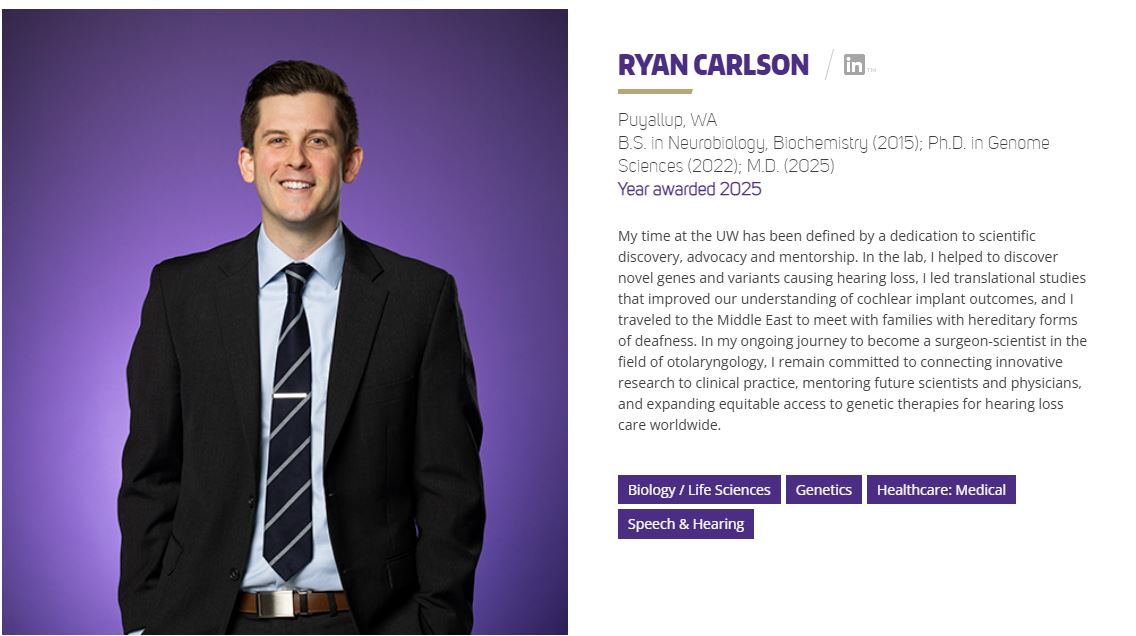
The Husky 100 include undergraduate, graduate and professional students who have founded start-ups, created artwork, served as mentors, conducted research and volunteered for nonprofits. They work on our campuses, in our communities and for local businesses. They are leaders and innovators. The one thing they share is that they actively connect what happens inside and outside of the classroom and apply what they learn to make a difference. Through their coursework, research, volunteer and leadership efforts, internships and jobs, they have created their own unique Husky Experience.
January 3, 2025
The carbon in our bodies probably left the galaxy and came back on cosmic ‘conveyor belt’
James Urton
UW News

An image of a dense, star-rich portion of our galaxy, the Milky Way, taken by the Hubble Space Telescope.NASA/ESA/Hubble Heritage Team
“Think of the circumgalactic medium as a giant train station: It is constantly pushing material out and pulling it back in,” said team member Samantha Garza, a University of Washington doctoral candidate. “The heavy elements that stars make get pushed out of their host galaxy and into the circumgalactic medium through their explosive supernovae deaths, where they can eventually get pulled back in and continue the cycle of star and planet formation.” Sam Garza, 2021-2024 ARCS Scholar Astronomy, University of Washington, Nancy P. & Douglas E. Norberg ARCS Endowment (5th)
Garza is lead author on a paper describing these findings that was published Dec. 27 in the Astrophysical Journal Letters. Click here to read the full article...
July 5, 2023
Research led by UW undergrad shows ultrafine air pollution reflects Seattle's redlining history
Alden Woods
UW News
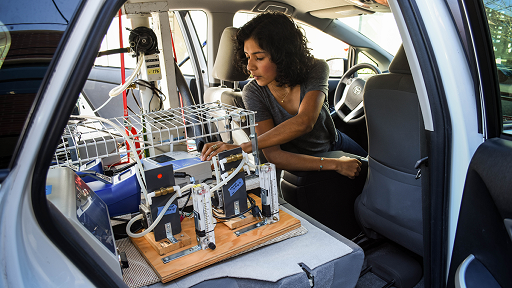
DEOHS student Magali Blanco, a co-author of the ultrafine particle study, checks mobile monitoring equipment used to gather air samples in the Seattle area. Photo: Sarah Fish.
Despite their invisibly small size, ultrafine particles have become a massive concern for air pollution experts. These tiny pollutants — typically spread through wildfire smoke, vehicle exhaust, industrial emissions and airplane fumes — can bypass some of the body’s built-in defenses, carrying toxins to every organ or burrowing deep in the lungs.
New research from the University of Washington found that those effects aren’t felt equitably in Seattle. The most comprehensive study yet of long-term ultrafine particle exposure found that concentrations of this tiny pollutant reflect the city’s decades-old racial and economic divides...CLICK HERE FOR FULL ARTICLE
Spotlight on Yasmeen Hussain, PhD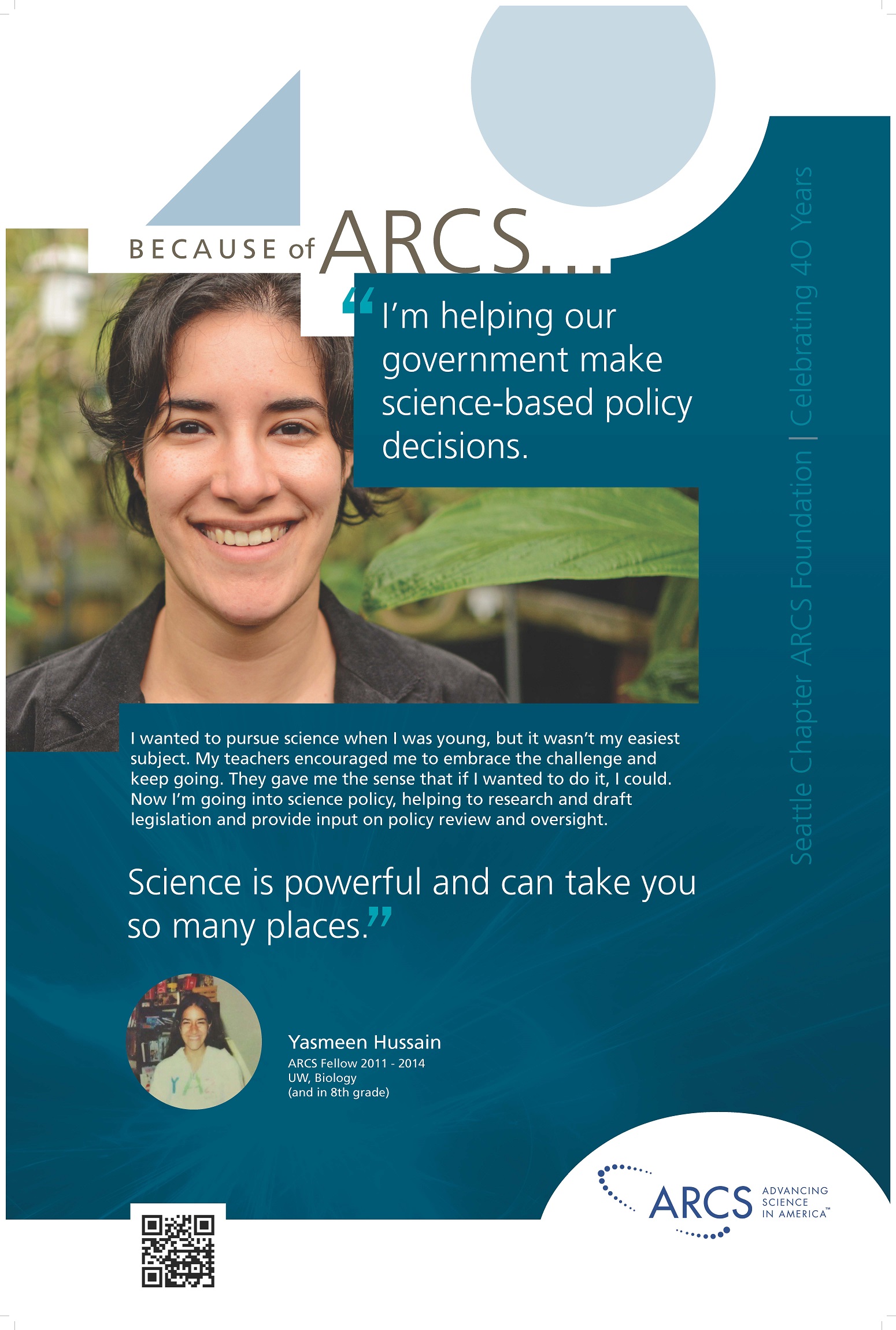
Yasmeen Hussain, UW ARCS Scholar
Donor Washington Research Foundation 81st Fellow (2011-2014)
Yasmeen Hussain Named Biophysical Society’s 2017-2018 Congressional Fellow Rockville, MD —
The Biophysical Society (BPS) is pleased to announce that it has selected Yasmeen Hussain, a recent graduate of the University of Washington, as the Society’s 2017-18 BPS Congressional Fellow. Hussain will spend a year working in a Congressional office on legislative and policy areas requiring scientific input. She will also be part of the AAAS Science and Technology Fellowship Program, which includes an orientation on congressional and executive branch operations and a year-long seminar series on issues related to science policy. Since receiving her PhD in biology, Hussain has worked as a Fellow and associate program officer at the National Academy of Sciences. She is looking forward “to being in the middle of the hustle and bustle that defines life on Capitol Hill,” and in a position where she “can contribute in a meaningful way.” The Biophysical Society has offered the congressional fellowship since 2015 in recognition that public policy increasingly impacts scientific research, and basic science literacy is increasingly needed to develop responsible policy. Through the fellowship, the Society’s leaders hope to provide a bridge between scientists and policymakers, and make sure that Congress has access to scientific expertise within its staff.